
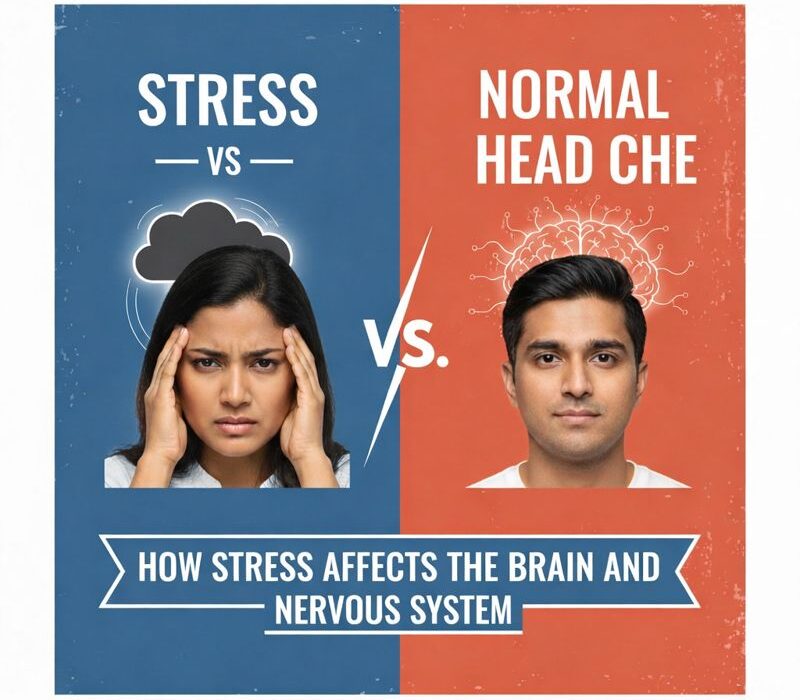
How Stress Affects the Brain and Nervous System
Stress has become a part of modern life. While short-term stress can help us stay alert and focused, chronic or long-term stress can seriously affect the brain and nervous system. Many neurological symptoms such as headaches, poor sleep, memory issues, and nerve pain are often linked to unmanaged stress.
Understanding how stress impacts the brain can help you take timely action and protect your neurological health.
What Happens in the Brain During Stress?
When you experience stress, the brain activates the fight-or-flight response. The hypothalamus sends signals to release stress hormones like cortisol and adrenaline.
In short bursts, this response is helpful. But when stress becomes constant, these hormones remain elevated and begin to damage normal brain function.
Effects of Stress on the Brain
1. Impaired Memory and Concentration
Chronic stress affects the hippocampus, the part of the brain responsible for memory and learning. This can lead to:
- Forgetfulness
- Difficulty concentrating
- Mental fatigue
2. Increased Risk of Anxiety and Depression
Long-term stress disrupts chemical balance in the brain, increasing the risk of:
- Anxiety disorders
- Depression
- Mood swings
3. Sleep Disturbances
Stress overstimulates the brain, making it hard to fall asleep or stay asleep. Poor sleep further worsens brain function and emotional stability.
4. Trigger for Migraines and Headaches
Stress is one of the most common triggers for migraines and tension headaches. Frequent stress can lead to chronic headache disorders requiring medical care.
How Stress Affects the Nervous System
The nervous system controls body functions such as movement, sensation, and organ activity. Chronic stress can overstimulate this system.
Common Nervous System Effects:
- Tingling or numbness in hands and feet
- Muscle tension and pain
- Tremors
- Increased nerve sensitivity
In some individuals, stress can worsen conditions like neuropathy, fibromyalgia, and cervical spondylosis.
Can Stress Cause Serious Neurological Problems?
While stress alone does not directly cause diseases like stroke or epilepsy, it can:
- Worsen existing neurological conditions
- Increase blood pressure
- Reduce immunity
- Delay recovery from neurological illness
This makes stress management an essential part of neurological care.
Signs Stress Is Affecting Your Brain Health
You should not ignore stress if you experience:
- Frequent headaches or migraines
- Memory problems
- Constant fatigue
- Irritability or mood changes
- Poor sleep quality
- Unexplained nerve pain
How to Protect Your Brain from Stress
Healthy Ways to Manage Stress:
- Regular physical activity
- Adequate sleep
- Mindfulness or meditation
- Balanced diet
- Limiting screen time
- Talking to a healthcare professional
If symptoms persist, medical evaluation is important.
When Should You See a Neurologist?
Consult a neurologist if:
- Stress-related symptoms are severe or worsening
- Headaches become frequent or disabling
- You experience numbness, weakness, or dizziness
- Stress affects your daily functioning
Early diagnosis helps prevent long-term neurological complications.