

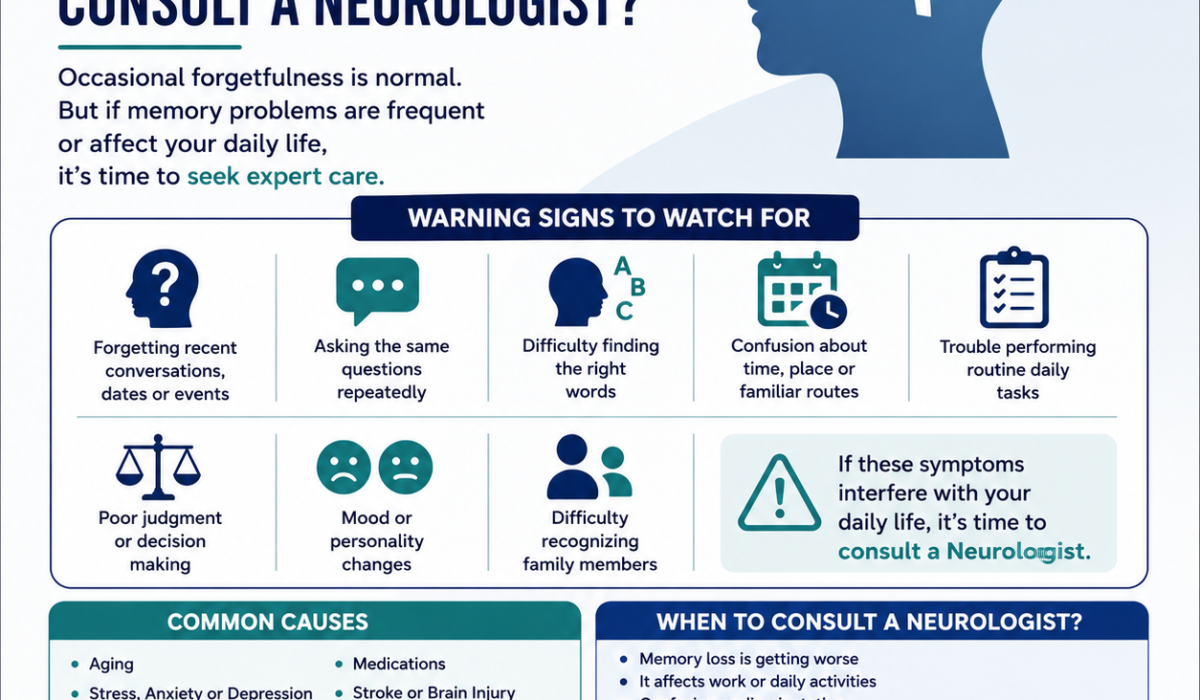
Memory Loss: When Should You Consult a Neurologist?
Memory loss is a common concern that can affect people of all ages, although it becomes more common as we grow older. While occasionally forgetting where you placed your keys or missing an appointment is usually harmless, persistent or worsening memory problems may indicate an underlying neurological condition that requires medical attention.
In this article, we’ll discuss the causes of memory loss, warning signs to watch for, and when it’s time to consult a neurologist.
What Is Memory Loss?
Memory loss refers to difficulty remembering information, events, or skills that you previously knew. It can affect your short-term memory (recent events) or long-term memory (past experiences and learned information).
Mild forgetfulness can occur due to stress, lack of sleep, or aging. However, significant memory problems that interfere with daily life should never be ignored.
Common Causes of Memory Loss
Memory loss can result from various medical, psychological, and neurological conditions, including:
- Aging-related memory changes
- Alzheimer’s disease
- Dementia
- Stroke
- Brain injury
- Parkinson’s disease
- Vitamin B12 deficiency
- Thyroid disorders
- Depression and anxiety
- Chronic stress
- Poor sleep or sleep apnea
- Certain medications
- Alcohol or substance abuse
- Brain infections or tumors (less common)
Identifying the exact cause is essential because many conditions are treatable, especially when diagnosed early.
When Should You See a Neurologist?
Consult a neurologist immediately if memory loss:
- Is getting worse over time
- Affects work or daily activities
- Causes confusion or disorientation
- Occurs after a head injury
- Is accompanied by weakness, speech difficulty, vision changes, or balance problems
- Is associated with seizures
- Causes changes in personality or behavior
Early diagnosis often leads to better treatment outcomes.