

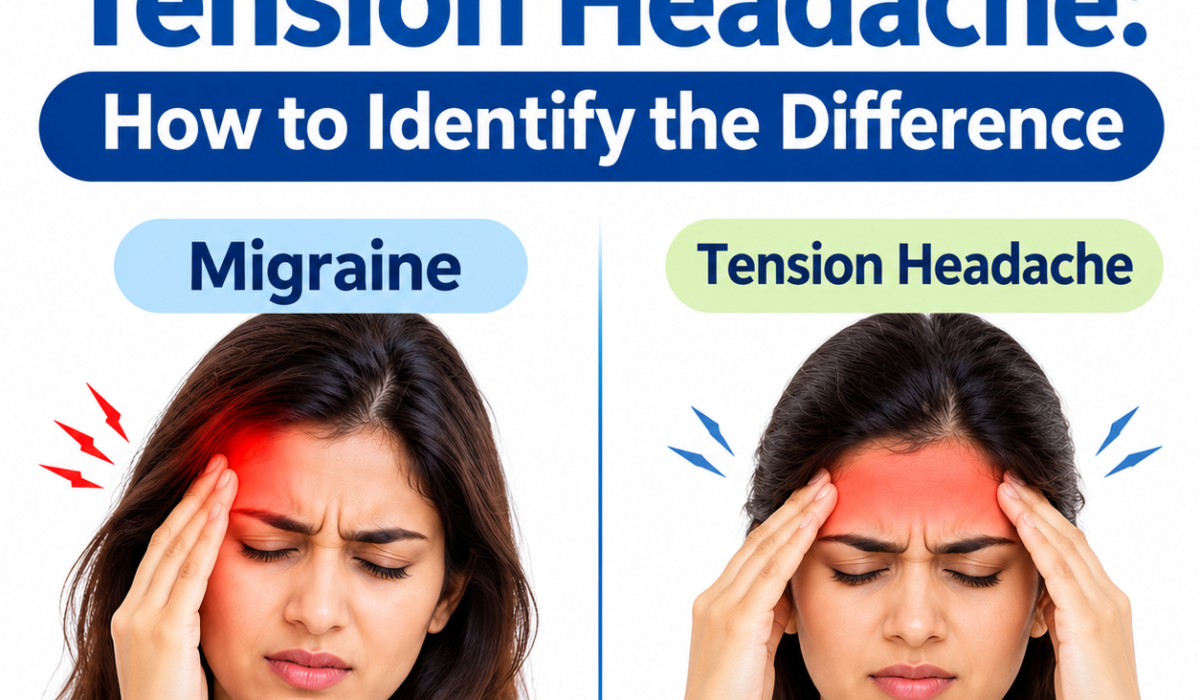
Migraine vs. Tension Headache: How to Identify the Difference
Headaches are one of the most common health problems affecting people of all ages. However, not all headaches are the same. Two common types are migraine headaches and tension-type headaches. Although both can cause discomfort and interfere with daily activities, they differ in their symptoms, intensity, causes, and treatment approaches.
Understanding the difference between migraine and tension headaches can help you identify the symptoms early and seek the right medical care.
What Is a Migraine?
A migraine is a neurological condition that causes recurring episodes of moderate to severe headaches. It is often associated with symptoms such as nausea, vomiting, sensitivity to light, and sensitivity to sound.
Migraine pain commonly affects one side of the head, although it can occur on both sides.
Common Symptoms of Migraine
- Throbbing or pulsating headache.
- Moderate to severe head pain.
- Pain that may worsen with physical activity.
- Nausea and vomiting.
- Sensitivity to light and sound.
- Visual disturbances, such as flashing lights or zigzag patterns (migraine aura).
- Dizziness or difficulty concentrating.
Migraine attacks can last from a few hours to several days.
What Is a Tension Headache?
A tension-type headache is a common headache disorder that typically causes mild to moderate pain. People often describe it as a tight band or pressure around the forehead, temples, or back of the head.
Unlike migraine, tension headaches usually do not cause nausea or vomiting.
Common Symptoms of Tension Headache
- Dull, aching head pain.
- Pressure or tightness around the forehead.
- Pain on both sides of the head.
- Tightness in the neck and shoulder muscles.
- Mild sensitivity to light or sound in some cases.
- Head discomfort that usually does not worsen with routine physical activity.
Tension headaches may last from 30 minutes to several hours, and sometimes longer.
What Triggers Migraine and Tension Headaches?
Both headache types can be associated with lifestyle factors, stress, and environmental triggers.
Common migraine triggers:
- Lack of sleep or irregular sleeping patterns.
- Hormonal changes.
- Skipping meals.
- Dehydration.
- Certain foods and beverages.
- Bright lights and strong smells.
- Stress and anxiety.
Common tension headache triggers:
- Emotional stress.
- Poor posture.
- Long hours working on computers.
- Neck and shoulder muscle tension.
- Eye strain.
- Lack of sleep.
- Fatigue.
Identifying and avoiding individual triggers can help reduce the frequency of headaches.
When Should You See a Neurologist?
Occasional headaches may not always indicate a serious problem. However, frequent, severe, or changing headaches should not be ignored.
Consult a neurologist if you experience:
- Frequent headaches that interfere with your daily activities.
- Severe or recurring migraine attacks.
- Headaches that are becoming more frequent or intense.
- Headaches associated with dizziness or visual disturbances.
- Persistent headaches that do not improve with treatment.
- Headaches accompanied by unexplained neurological symptoms.
Seek emergency medical attention if you experience a sudden, extremely severe headache, weakness on one side, difficulty speaking, confusion, seizures, or a new severe headache with fever and neck stiffness.