
Myasthenia Gravis Treatment: Managing Symptoms for a Better Quality of Life
Myasthenia Gravis (MG) is a chronic autoimmune neurological disorder that affects the communication between nerves and muscles, leading to muscle weakness and fatigue. Although there is no permanent cure, early diagnosis and proper treatment can help manage symptoms effectively and improve daily functioning.
What is Myasthenia Gravis?
Myasthenia Gravis occurs when the immune system mistakenly attacks the connection between nerves and muscles. This disrupts normal muscle movement and causes weakness that often worsens with activity and improves with rest.
Common Symptoms of Myasthenia Gravis
Symptoms may vary from person to person and can range from mild to severe.
Muscle Weakness
Weakness commonly affects the eyes, face, neck, arms, and legs.
Drooping Eyelids
One or both eyelids may droop, especially later in the day.
Double Vision
Many patients experience blurred or double vision due to weakened eye muscles.
Difficulty Speaking or Swallowing
Weak throat muscles may cause slurred speech, chewing difficulty, or swallowing problems.
Fatigue
Muscles may tire quickly after repeated use.
Causes and Risk Factors
The exact cause of Myasthenia Gravis is not fully understood, but it is linked to abnormal immune system activity. Certain factors may increase the risk, including:
- Autoimmune disorders
- Thymus gland abnormalities
- Genetic predisposition
- Stress or infections
Treatment Options for Myasthenia Gravis
Treatment focuses on improving muscle strength, controlling symptoms, and preventing complications.
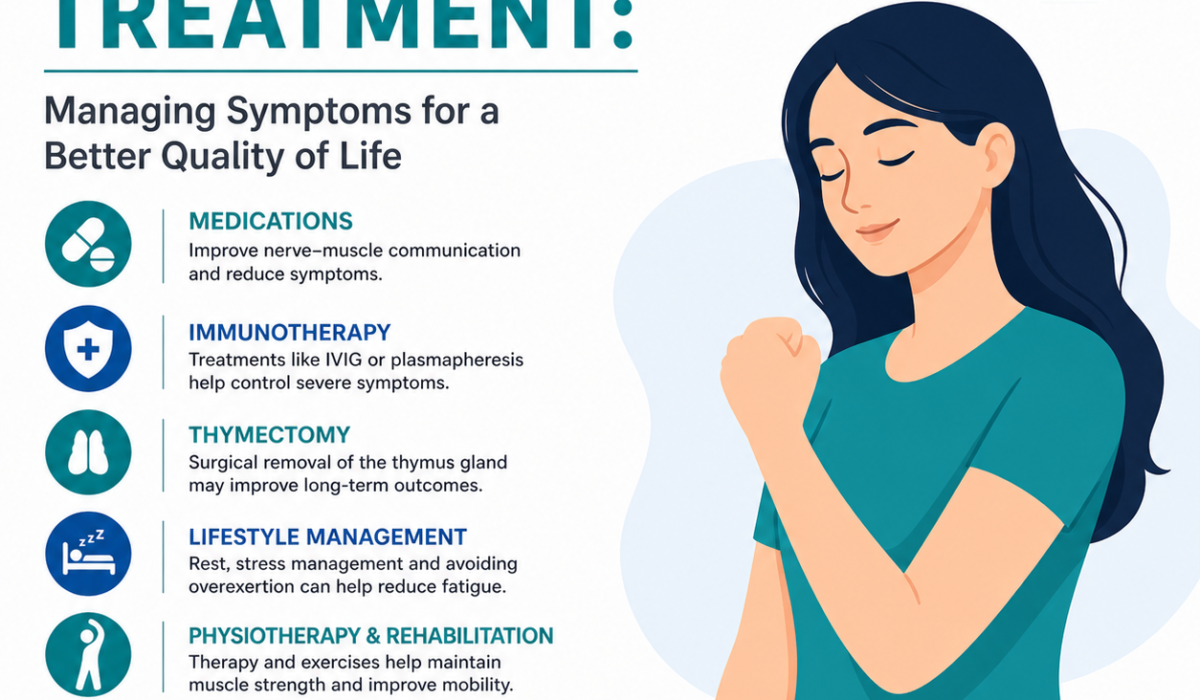
Medications
Doctors may prescribe medications that improve communication between nerves and muscles or suppress abnormal immune responses.
Immunotherapy
Advanced treatments such as intravenous immunoglobulin (IVIG) or plasmapheresis may help reduce severe symptoms.
Thymectomy
Surgical removal of the thymus gland may improve symptoms in some patients.
Lifestyle Management
Adequate rest, stress management, and avoiding excessive physical exertion can help reduce fatigue.
Physiotherapy & Rehabilitation
Therapy can help maintain muscle strength and improve mobility.
When to Seek Immediate Medical Attention
Emergency care may be needed if a person experiences:
- Severe breathing difficulty
- Inability to swallow
- Sudden worsening of muscle weakness
Living with Myasthenia Gravis
With proper medical care and lifestyle adjustments, many individuals with Myasthenia Gravis can lead active and fulfilling lives. Regular follow-ups and timely treatment play an important role in long-term management.