

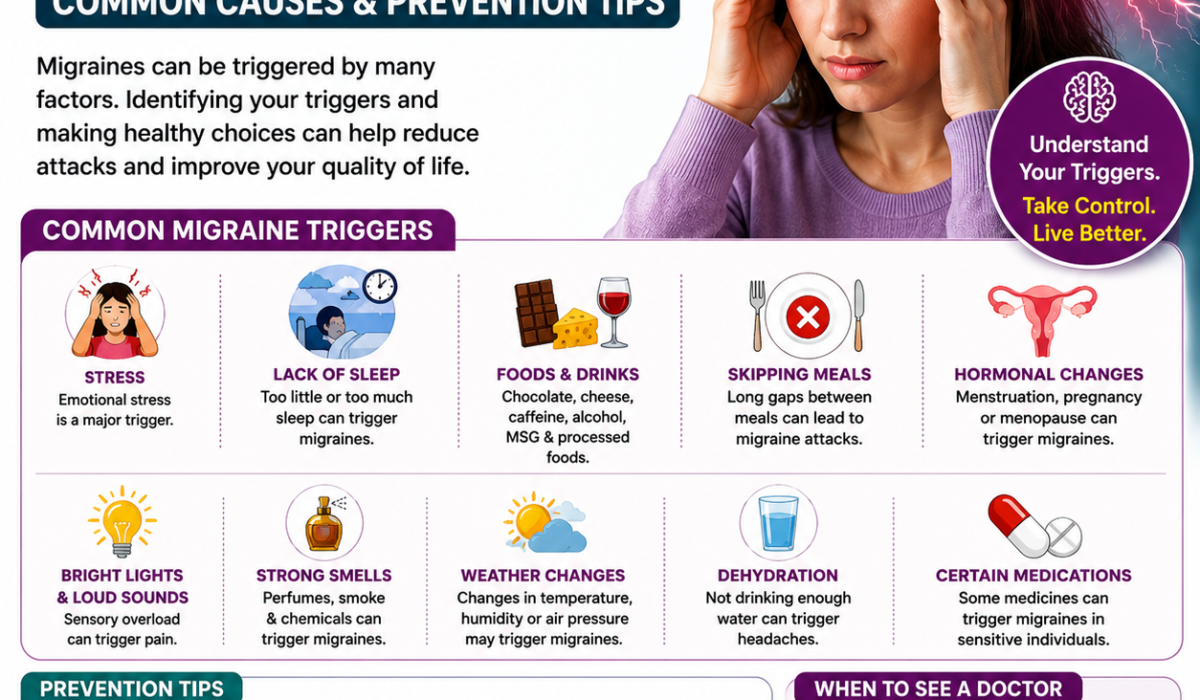
What Triggers Migraines? Common Causes and Prevention Tips
Migraines are more than just severe headaches. They are a neurological condition that can significantly affect daily life, making it difficult to work, study, or enjoy everyday activities. Migraine attacks often come with intense, throbbing pain and may be accompanied by nausea, vomiting, and sensitivity to light and sound.
Although the exact cause of migraines is not fully understood, identifying and avoiding personal triggers can help reduce the frequency and severity of attacks. Understanding what causes migraines is the first step toward better prevention and management.
What Is a Migraine?
A migraine is a neurological disorder characterized by recurring episodes of moderate to severe headache, usually affecting one side of the head. The pain can last anywhere from a few hours to several days and may interfere with normal activities.
Some people experience an aura before a migraine begins. An aura may include:
- Flashing lights or blind spots
- Tingling or numbness
- Difficulty speaking
- Temporary vision changes
Not everyone with migraines experiences an aura.
Common Migraine Triggers
Migraine triggers vary from person to person. Keeping a migraine diary can help identify patterns and avoid potential triggers.
1. Stress
Emotional stress is one of the most common migraine triggers. Work pressure, anxiety, lack of relaxation, and emotional changes can contribute to migraine attacks.
2. Lack of Sleep
Too little sleep, poor sleep quality, or even oversleeping can trigger migraines in some individuals.
3. Certain Foods and Beverages
Some people notice migraines after consuming:
- Processed or aged cheese
- Chocolate
- Caffeinated drinks
- Alcohol, especially red wine
- Artificial sweeteners
- Monosodium glutamate (MSG)
- Processed meats
Food triggers differ from person to person.
4. Skipping Meals
Going long hours without eating or fasting may cause blood sugar levels to drop, increasing the risk of a migraine attack.
5. Hormonal Changes
Many women experience migraines around menstruation, pregnancy, or menopause due to hormonal fluctuations.
6. Bright Lights and Loud Sounds
Flashing lights, prolonged screen time, loud music, or noisy environments may trigger migraines in sensitive individuals.
7. Strong Smells
Perfumes, cigarette smoke, paint fumes, and certain chemicals can trigger headaches in some people.
8. Weather Changes
Changes in temperature, humidity, air pressure, or extreme heat may contribute to migraine attacks.
9. Dehydration
Not drinking enough water is a common but preventable migraine trigger.
10. Certain Medications
Some medications may contribute to headaches or trigger migraines. Never stop prescribed medications without consulting your healthcare provider.
Common Symptoms of a Migraine
Migraine symptoms may include:
- Throbbing or pulsating headache
- Pain on one or both sides of the head
- Nausea or vomiting
- Sensitivity to light
- Sensitivity to sound
- Sensitivity to smells
- Blurred vision
- Dizziness
- Fatigue
- Difficulty concentrating
Symptoms can vary from person to person.
Tips to Prevent Migraines
Maintain a Regular Sleep Schedule
Aim for 7–9 hours of quality sleep each night and try to go to bed and wake up at the same time every day.
Stay Hydrated
Drink enough water throughout the day to prevent dehydration.
Don’t Skip Meals
Eat balanced meals at regular intervals to maintain stable blood sugar levels.
Manage Stress
Practice relaxation techniques such as:
- Deep breathing
- Meditation
- Yoga
- Regular physical activity
- Mindfulness exercises
Exercise Regularly
Moderate exercise can help reduce migraine frequency. However, avoid sudden intense workouts if they trigger your headaches.
Limit Trigger Foods
If certain foods consistently trigger migraines, reduce or avoid them after discussing dietary changes with your healthcare provider.
Reduce Screen Time
Take regular breaks when using computers or mobile devices and adjust screen brightness if needed.
Keep a Migraine Diary
Record:
- When the migraine occurred
- Foods eaten
- Sleep duration
- Stress levels
- Weather conditions
- Activities before the attack
This information can help identify personal triggers and guide treatment.
When Should You See a Neurologist?
Consult a neurologist if you experience:
- Frequent migraines
- Severe headaches that interfere with daily life
- Sudden, unusually intense headaches
- New headaches after age 50
- Headaches associated with weakness, confusion, vision changes, seizures, or difficulty speaking
- Migraines that do not improve with treatment
Early evaluation can help rule out other neurological conditions and ensure appropriate management.
Treatment Options for Migraines
Migraine treatment depends on the frequency and severity of symptoms. Your neurologist may recommend:
- Pain-relieving medications
- Migraine-specific medications
- Preventive medications for frequent attacks
- Lifestyle modifications
- Stress management strategies
- Trigger avoidance
- Hydration and dietary adjustments
Treatment plans are individualized based on each patient’s needs.