Understanding Neuropathy: Causes, Symptoms & Treatment Options
Neuropathy, also known as peripheral neuropathy, is a condition that occurs when nerves outside the brain and spinal cord are damaged. These nerves help transmit signals between the brain and the rest of the body. When they are damaged, it can lead to pain, numbness, weakness, and other uncomfortable symptoms.
What is Neuropathy?
Neuropathy refers to damage or dysfunction of one or more nerves. It most commonly affects the hands and feet, but it can also impact other parts of the body.
Peripheral neuropathy affects the peripheral nervous system, which connects the brain and spinal cord to muscles, skin, and internal organs.
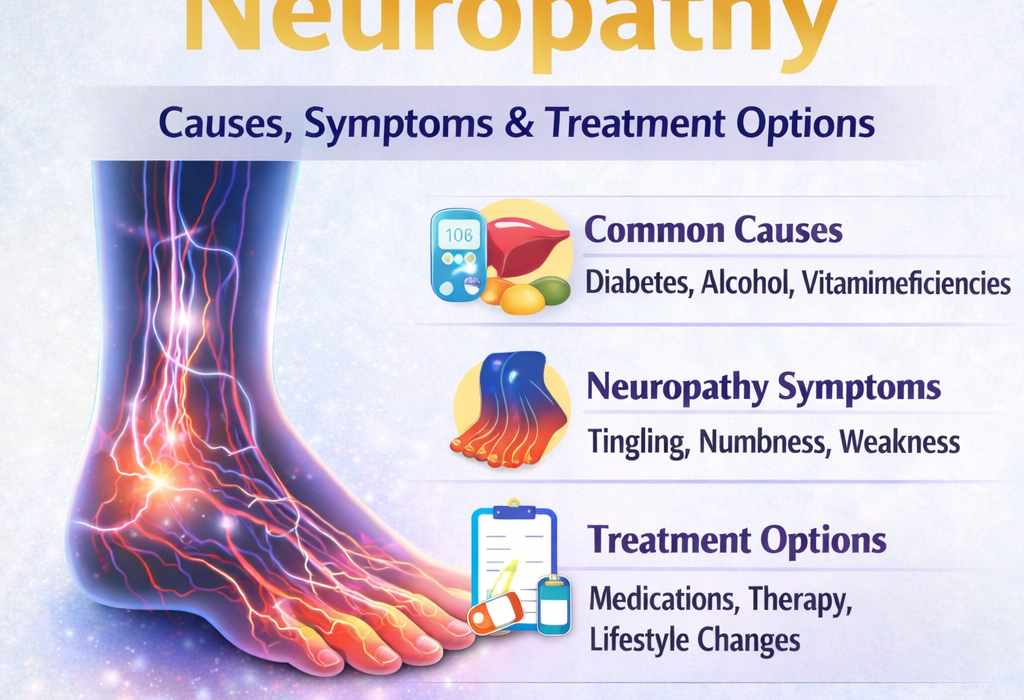
Common Causes of Neuropathy
Neuropathy can develop due to several reasons, including:
- Diabetes (most common cause)
- Vitamin deficiencies (especially B12)
- Alcohol abuse
- Infections
- Autoimmune diseases
- Kidney or liver disorders
- Chemotherapy
- Nerve compression injuries
Diabetic neuropathy is one of the leading complications of long-term uncontrolled diabetes.
Symptoms of Neuropathy
Symptoms vary depending on the type of nerves affected (sensory, motor, or autonomic).
Sensory Symptoms:
- Tingling or burning sensation
- Numbness in hands or feet
- Sharp, stabbing pain
- Increased sensitivity to touch
Motor Symptoms:
- Muscle weakness
- Difficulty walking
- Loss of coordination
Autonomic Symptoms:
- Dizziness
- Digestive issues
- Changes in blood pressure
- Excessive sweating
If left untreated, symptoms may gradually worsen.
Types of Neuropathy
- Peripheral Neuropathy – Affects hands and feet
- Diabetic Neuropathy – Caused by high blood sugar
- Autonomic Neuropathy – Affects internal organs
- Focal Neuropathy – Affects a single nerve
Diagnosis
Early diagnosis improves outcomes. Your doctor may recommend:
- Detailed medical history
- Neurological examination
- Nerve conduction studies
- Electromyography (EMG)
- Blood tests
- MRI (if needed)
Treatment Options
Treatment focuses on managing the underlying cause and relieving symptoms.
Common Treatment Methods:
- Blood sugar control (for diabetic patients)
- Vitamin supplementation
- Pain-relieving medications
- Nerve-protecting medicines
- Physical therapy
- Lifestyle modifications
In some cases, advanced pain management or interventional procedures may be required.