

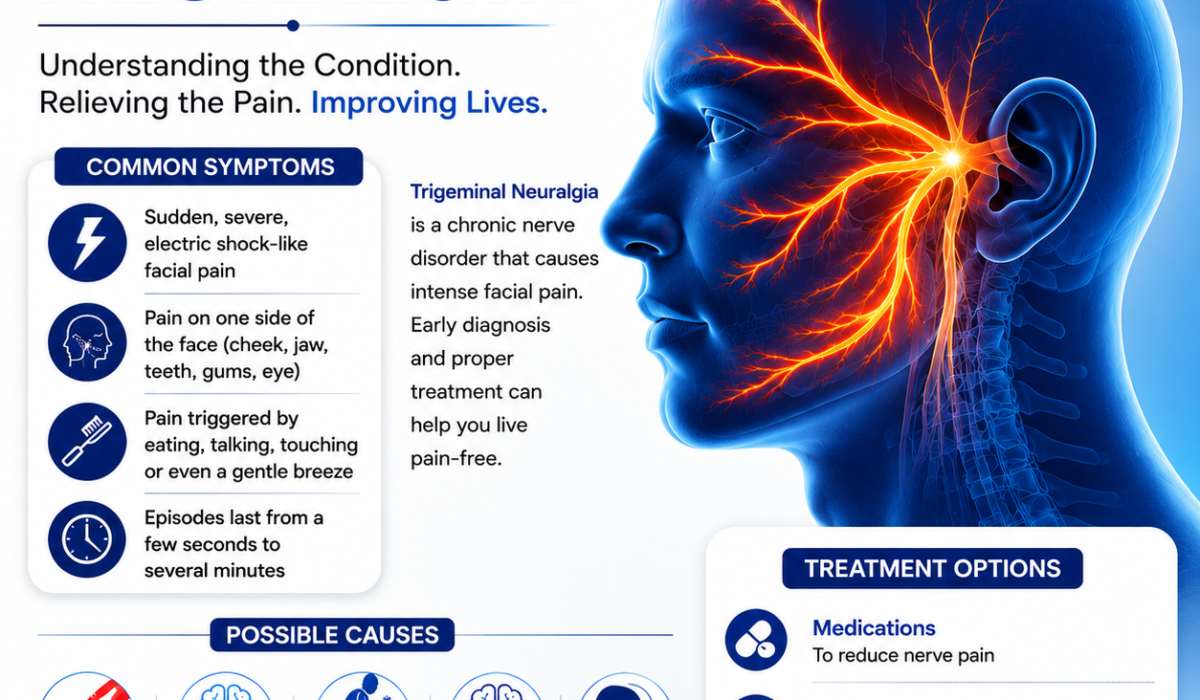
Trigeminal Neuralgia: Causes, Symptoms, Diagnosis, and Treatment
What is Trigeminal Neuralgia?
Trigeminal Neuralgia (TN) is a chronic pain condition that affects the trigeminal nerve, the nerve responsible for carrying sensation from the face to the brain. It is often described as one of the most severe types of facial pain, causing sudden, sharp, electric shock-like sensations on one side of the face.
Even simple daily activities such as brushing teeth, chewing, speaking, washing the face, or feeling a gentle breeze can trigger intense pain episodes.
Causes of Trigeminal Neuralgia
Trigeminal Neuralgia occurs when the trigeminal nerve becomes irritated or compressed. Common causes include:
Blood Vessel Compression
A nearby blood vessel may press against the trigeminal nerve, causing damage to its protective covering (myelin sheath).
Aging
The condition is more common in individuals over the age of 50.
Multiple Sclerosis (MS)
MS can damage the myelin sheath surrounding nerves, including the trigeminal nerve.
Tumors
Rarely, a tumor pressing on the trigeminal nerve can cause symptoms.
Facial Injury or Trauma
Previous facial injuries, surgeries, or dental procedures may contribute to nerve irritation.
Symptoms of Trigeminal Neuralgia
People with Trigeminal Neuralgia may experience:
- Sudden, severe facial pain
- Electric shock-like sensations
- Burning or stabbing facial pain
- Pain affecting the cheek, jaw, lips, gums, or eye area
- Pain triggered by eating, talking, brushing teeth, or touching the face
- Episodes lasting from a few seconds to several minutes
- Recurrent attacks over days, weeks, or months
The pain usually affects one side of the face and can significantly impact quality of life.
Risk Factors
Certain factors increase the likelihood of developing Trigeminal Neuralgia:
- Age above 50 years
- Female gender
- Multiple sclerosis
- High blood pressure
- Family history of neurological disorders
How is Trigeminal Neuralgia Diagnosed?
A neurologist can diagnose Trigeminal Neuralgia through:
Clinical Evaluation
Detailed assessment of symptoms, pain patterns, and triggers.
Neurological Examination
Evaluation of facial sensation and nerve function.
MRI Scan
Magnetic Resonance Imaging (MRI) helps identify nerve compression, tumors, or multiple sclerosis.
Accurate diagnosis is essential because other conditions such as dental problems, sinus disease, migraines, and temporomandibular joint (TMJ) disorders can mimic facial pain.
Treatment Options for Trigeminal Neuralgia
Medications
Most patients respond well to medications that reduce abnormal nerve signals, including:
- Carbamazepine
- Oxcarbazepine
- Gabapentin
- Pregabalin
- Baclofen
Minimally Invasive Procedures
For patients who do not respond adequately to medications, procedures may include:
- Radiofrequency Ablation
- Balloon Compression
- Glycerol Injection
- Stereotactic Radiosurgery (Gamma Knife)
Microvascular Decompression Surgery
This advanced surgical procedure relieves pressure on the trigeminal nerve caused by a blood vessel and may provide long-term pain relief.
When Should You See a Neurologist?
Consult a neurologist if you experience:
- Severe facial pain
- Recurrent electric shock-like facial sensations
- Pain triggered by routine activities
- Facial pain that does not respond to dental treatment
- Frequent episodes affecting daily life
Early diagnosis and treatment can help prevent worsening symptoms and improve quality of life.
Living with Trigeminal Neuralgia
Managing Trigeminal Neuralgia often requires a combination of medication, lifestyle adjustments, and specialist care. Avoiding known triggers, maintaining regular follow-ups, and adhering to treatment plans can help reduce the frequency and severity of pain episodes.