
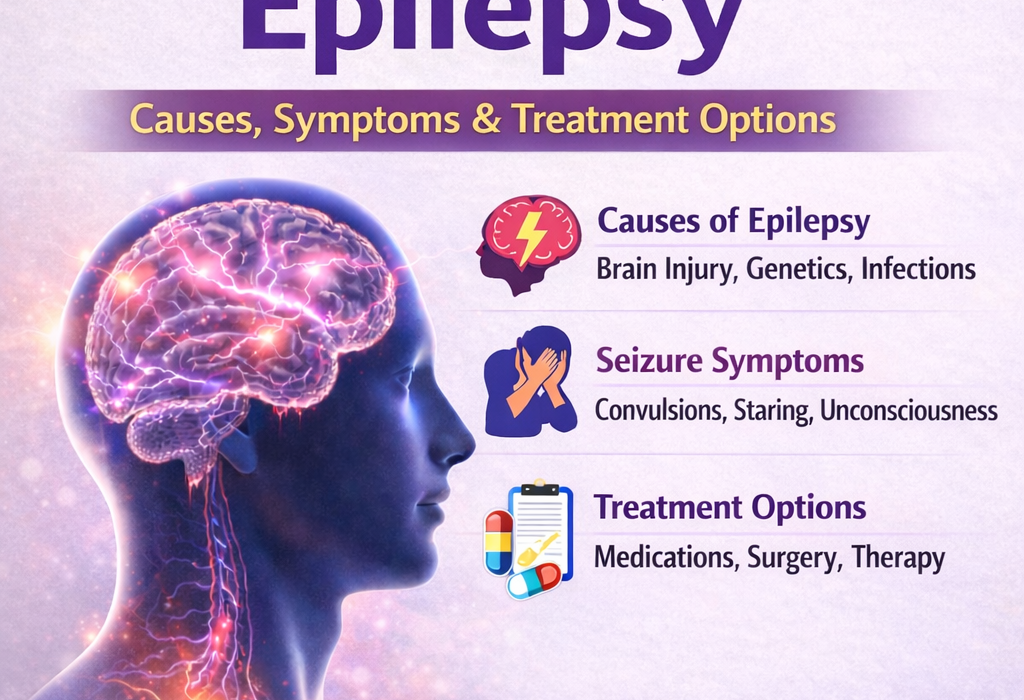
Understanding Epilepsy: Causes, Symptoms & Treatment Options
Epilepsy is a neurological disorder that affects the brain and causes recurrent seizures. It can affect people of all ages and backgrounds. With proper diagnosis and treatment, most individuals with epilepsy can lead a normal and healthy life.
What is Epilepsy?
Epilepsy is a condition in which there is abnormal electrical activity in the brain, leading to seizures. A seizure is a sudden surge of electrical signals that temporarily affects how the brain functions.
Common Causes of Epilepsy
Epilepsy can be caused by:
- Brain injury or trauma
- Stroke
- Brain infections
- Genetic factors
- Brain tumors
- Developmental disorders
- Birth-related complications
In some cases, the exact cause may remain unknown.
Symptoms of Epilepsy
Symptoms vary depending on the type of seizure. Common signs include:
- Sudden jerking movements of arms and legs
- Temporary confusion
- Loss of consciousness
- Staring spells
- Sudden fear or anxiety
- Uncontrolled movements
If someone experiences repeated seizures, medical evaluation is essential.
Types of Seizures
- Focal Seizures – Affect one part of the brain
- Generalized Seizures – Affect both sides of the brain
- Absence Seizures – Brief loss of awareness
Diagnosis
Diagnosis may include:
- Detailed medical history
- Neurological examination
- EEG (Electroencephalogram)
- MRI Brain scan
- Blood tests
Early diagnosis helps in better treatment planning.